
Categories
Home Buying TipsPublished September 10, 2026
Why Do Phoenix Homes Fail Radon Inspection?

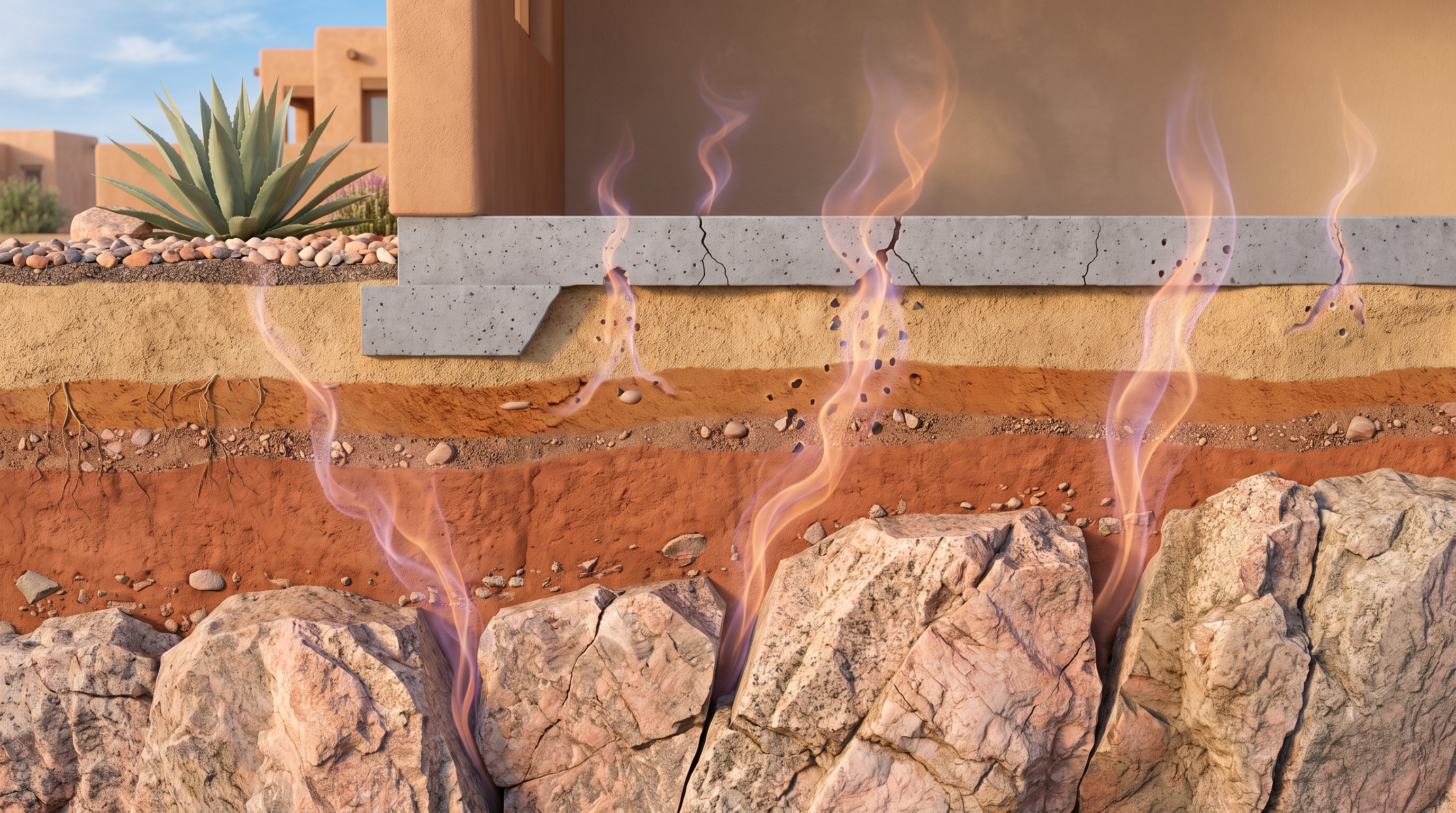
Radon is a colorless, odorless radioactive gas that seeps into homes from soil and rock below. In Phoenix Metro, radon failures happen because of granite bedrock and volcanic soil that naturally contain uranium and radium. These elements decay into radon gas, which moves up through foundation cracks, gaps around pipes, and soil pores. When a home inspection includes a radon test and levels exceed 4 picocuries per liter (pCi/L), the EPA action level, the inspection "fails." Knowing why Phoenix homes fail radon tests helps you understand the risk, plan mitigation, and negotiate repairs or credits during a sale.
Why Radon Occurs in Phoenix Soil
Phoenix sits on ancient granite and volcanic rock. These minerals naturally contain uranium and radium, which decay into radon over millions of years. The gas doesn't stay trapped in stone; it migrates into soil and air pockets around your foundation. Dry, compacted soil is common in the Phoenix Metro, and radon moves through these gaps more easily than through wet clay soil in humid regions.
The Arizona Geological Survey and EPA map radon potential across Arizona. Most of Maricopa County, including Phoenix, Chandler, Gilbert, Ahwatukee, and Scottsdale, falls into Zone 2 (moderate potential) or Zone 3 (highest potential) in some pockets. Homes built on native soil closer to foothill areas or with exposed granite tend to test higher.
Foundation and Construction Factors That Increase Radon
Even with radon-rich soil, not every Phoenix home fails a radon test. Construction details matter. Homes with slab-on-grade foundations (common in Phoenix) sit directly on soil. If the slab has cracks, or if the soil beneath hasn't been sealed, radon enters more easily. Older homes built before radon-resistant construction became standard often lack vapor barriers under the slab.
Gaps around utility penetrations (plumbing, electrical) and foundation settling also let radon in. Basements are rare in Phoenix but create major radon risk because they have more contact with soil. Homes with block or concrete-stem walls and poor caulking allow more gas entry than sealed, poured-concrete foundations.
How Radon Testing Works in a Phoenix Home Sale
During a typical Phoenix purchase, the buyer orders a radon inspection as part of the general home inspection or as an add-on. The test runs for 48 hours with doors and windows closed and HVAC set to normal operation. A certified tester places a charcoal canister or electronic device in the lowest livable level and records the reading.
If the result is 4 pCi/L or higher, the EPA recommends action. In Arizona purchase contracts, radon discovery often triggers negotiation. The seller may offer a mitigation credit, complete mitigation before closing, or the buyer may walk away. Unlike some states with mandatory radon testing, Arizona has no state law requiring sellers to test or disclose radon, though responsible sellers often do.
Radon Mitigation Costs and Methods
Radon mitigation in Phoenix typically involves active soil depressurization. A contractor drills through the slab or foundation, installs a vent pipe, and uses a fan to pull radon from soil before it enters the home. The pipe runs up the exterior wall and vents above the roofline. Cost ranges from $1,200 to $2,500 depending on foundation type, slab thickness, and whether the home is single-story or multi-story.
Simpler fixes, like sealing cracks and caulking penetrations, cost $300 to $800 but rarely reduce radon to safe levels on their own. Post-mitigation testing (another $150 to $300) confirms the system works. In a Phoenix Metro example, a buyer in Chandler discovers a radon level of 6.2 pCi/L on a $450,000 home. The seller installs active mitigation for $1,600 and provides a post-test showing 2.1 pCi/L. The buyer and seller split the cost via credit at closing.
Impact on Home Resale and Property Value
A radon failure doesn't tank a Phoenix home's value if mitigation is completed and documented. Buyers expect disclosure of past radon issues and proof of a working system. A home with a certified, functioning radon mitigation system installed is easier to insure and refinance than an untreated high-radon home.
Homes that fail radon testing but sit unsold for months may see price pressure. However, once mitigated and retested, they typically sell at comparable prices to nearby homes. The cost of mitigation is usually much smaller than the cost of losing a buyer or extending time on market in Phoenix's competitive submarkets like Scottsdale, Queen Creek, or Gilbert.
What Buyers and Sellers Should Do
If you're buying in Phoenix Metro, request a radon inspection during your home inspection period (usually 5 to 10 days from under contract). If the home fails, ask the seller to mitigate and retest, or negotiate a credit toward your own mitigation after closing.
If you're selling, consider testing before listing. A pre-sale radon test removes uncertainty and shows confidence to buyers. If your Phoenix home tests high, budget $1,200 to $2,500 for mitigation. The cost is far less than a deal falling through or price reduction. Buyers increasingly expect this especially in areas closer to the Phoenix foothills or known radon zones.
People Also Ask
Is radon dangerous in Phoenix homes?
Radon is the second leading cause of lung cancer after smoking, according to the EPA. Long-term exposure at high levels increases risk. Short-term elevated radon during a real estate transaction is less dangerous than years of living in an untreated home. Mitigation systems reliably reduce radon to safe levels.
Do all Phoenix homes have radon?
No. Radon levels vary by location, soil type, and foundation. Some Phoenix homes test below 2 pCi/L while neighbors test above 4 pCi/L. Geography matters: homes near Camelback Mountain, South Mountain Park in Ahwatukee, or the Apache Trail foothills may test higher than central Phoenix or planned communities. Test your specific home to know your risk.
Can I sell a home with radon in Phoenix?
Yes. Arizona has no law preventing sale of a radon-affected home. However, buyers must be informed if radon was found. Most buyers will insist on mitigation before closing, or the deal collapses. Selling a mitigated, retested home is straightforward and legally sound in Arizona.
Bottom Line
Phoenix homes fail radon inspections because of naturally radioactive granite and volcanic soil underneath. Radon seeps into foundations through cracks, gaps, and porous soil. Active mitigation costs $1,200 to $2,500 and works reliably. If you're buying or selling in the Phoenix Metro, include radon testing in your inspection plan and budget mitigation costs early. Neither a radon failure nor mitigation is a deal-breaker, but surprises late in closing are expensive. Talk to your Phoenix real estate agent about radon risk in your neighborhood and whether a pre-sale or pre-offer test makes sense for your situation.
Search homes for sale in Phoenix →

Ryan Melville
| SoldPHX - Ryan Melville at Keller Williams Realty Phoenix
or another way