
Categories
Home ImprovementPublished December 31, 2025
The Silent Tenant: Hidden Mold After Water Damage in Phoenix and Maricopa County

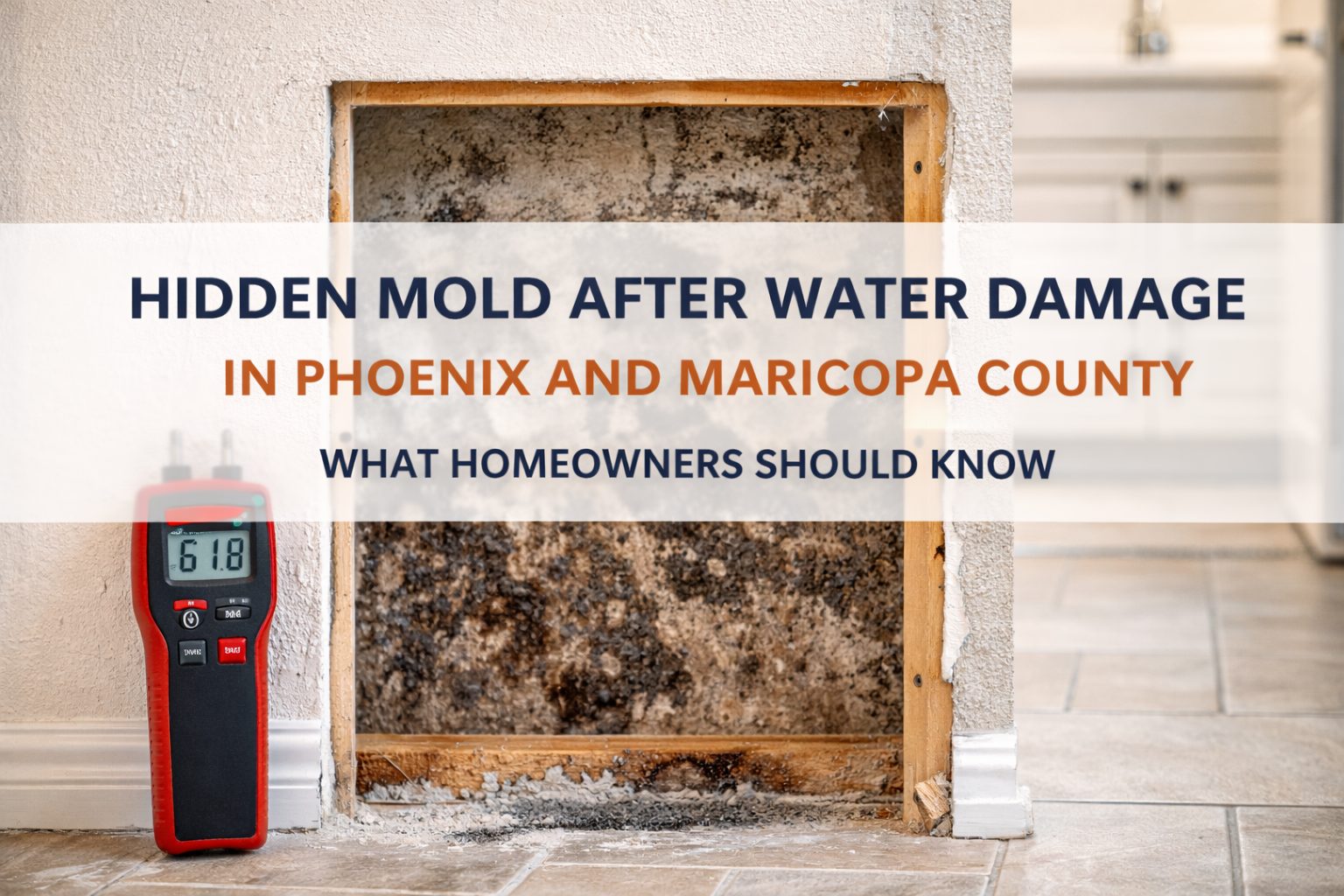
In Phoenix and across Maricopa County, many homeowners assume mold is a non-issue because of the dry climate. That assumption causes problems. Mold here does not usually come from flooding. It shows up after plumbing leaks, roof failures during monsoon season, or HVAC condensation that goes unnoticed.
Water damage in the Valley often looks minor on the surface. Behind walls, under tile, or beneath flooring, moisture can linger long enough for mold to grow quietly.
Here is what local homeowners and sellers need to know.
Why the First 48 Hours Still Matter in the Desert
Even in Arizona, mold can begin forming within 24 to 48 hours after water exposure. Dry air does not stop mold if moisture is trapped in enclosed spaces.
Common Phoenix-area sources include:
- Slab leaks
- Water heater failures in garages or closets
- Roof leaks after monsoon storms
- AC drain line clogs or attic condensation
- Bathroom or laundry room plumbing leaks
By the time staining or odors appear, mold is often already established behind drywall or under flooring.
Signs Phoenix Homeowners Should Not Ignore
Mold is rarely obvious at first. Watch for subtle changes, especially after any water issue.
Local warning signs include:
- Musty smells near bathrooms, kitchens, or air handlers
- Bubbling paint or baseboard swelling
- Tile or laminate lifting or hollow sounds underfoot
- Dark staining near ceiling vents or exterior walls
- Allergy or respiratory irritation that seems tied to time spent at home
If something feels off after a leak or AC issue, it usually is.
Why Mold Matters in the Maricopa County Housing Market
Mold is not just a health issue. It is a transaction issue.
During inspections, mold findings can:
- Trigger remediation demands
- Lead to price reductions or seller credits
- Delay or cancel escrows
- Create disclosure complications
Homes with unresolved water damage or undocumented mold repairs often face tougher negotiations, even in strong Phoenix markets.
Why DIY Mold Cleanup Often Backfires
Surface cleaning does not address hidden mold. Scrubbing visible areas without containment can spread spores through the home, especially through HVAC systems.
Professional remediation is recommended when:
- Materials stayed wet longer than 24 hours
- Mold is suspected behind walls or under flooring
- The AC system or ductwork may be involved
- The home is being prepared for sale
In Phoenix, HVAC-related moisture is one of the most common and overlooked contributors.
What Professional Remediation Looks Like Locally
Certified mold remediation in Maricopa County typically includes:
- Moisture source identification and repair
- Containment of affected areas
- Removal of contaminated materials when required
- HEPA air filtration
- Moisture mapping with meters or infrared imaging
The focus is not just removal, but preventing recurrence, which matters to both homeowners and buyers.
How Phoenix Homeowners Can Reduce Future Risk
Prevention in the Valley is about moisture control, not humidity alone.
Key steps include:
- Addressing leaks immediately
- Maintaining AC drain lines and condensate pans
- Monitoring areas near water heaters and slab plumbing
- Using proper ventilation in bathrooms and laundry rooms
- Verifying wall cavities are fully dried after any water event
Fast action is often the difference between a simple repair and a full remediation project.
Disclosure Considerations for Phoenix and Maricopa County Sellers
Arizona sellers are required to disclose known material defects. This includes water damage and mold issues, past or present.
If your home has had mold-related work:
- Disclose the issue accurately
- Provide documentation of professional remediation
- Note repairs made to correct the moisture source
Failing to disclose known mold issues can lead to disputes or liability after closing. Transparency protects you and keeps deals moving.
Final Takeaway for Valley Homeowners
Mold in Phoenix is rarely dramatic, but it is often hidden. The absence of visible growth does not mean the home is clear. Acting quickly after water damage and using professionals when needed protects your health, your property, and your resale position.

Ryan Melville
| SoldPHX - Ryan Melville at Keller Williams Realty Phoenix
or another way