
Categories
SellersPublished June 16, 2026
Does Home Staging Really Help Sell Faster in Phoenix?

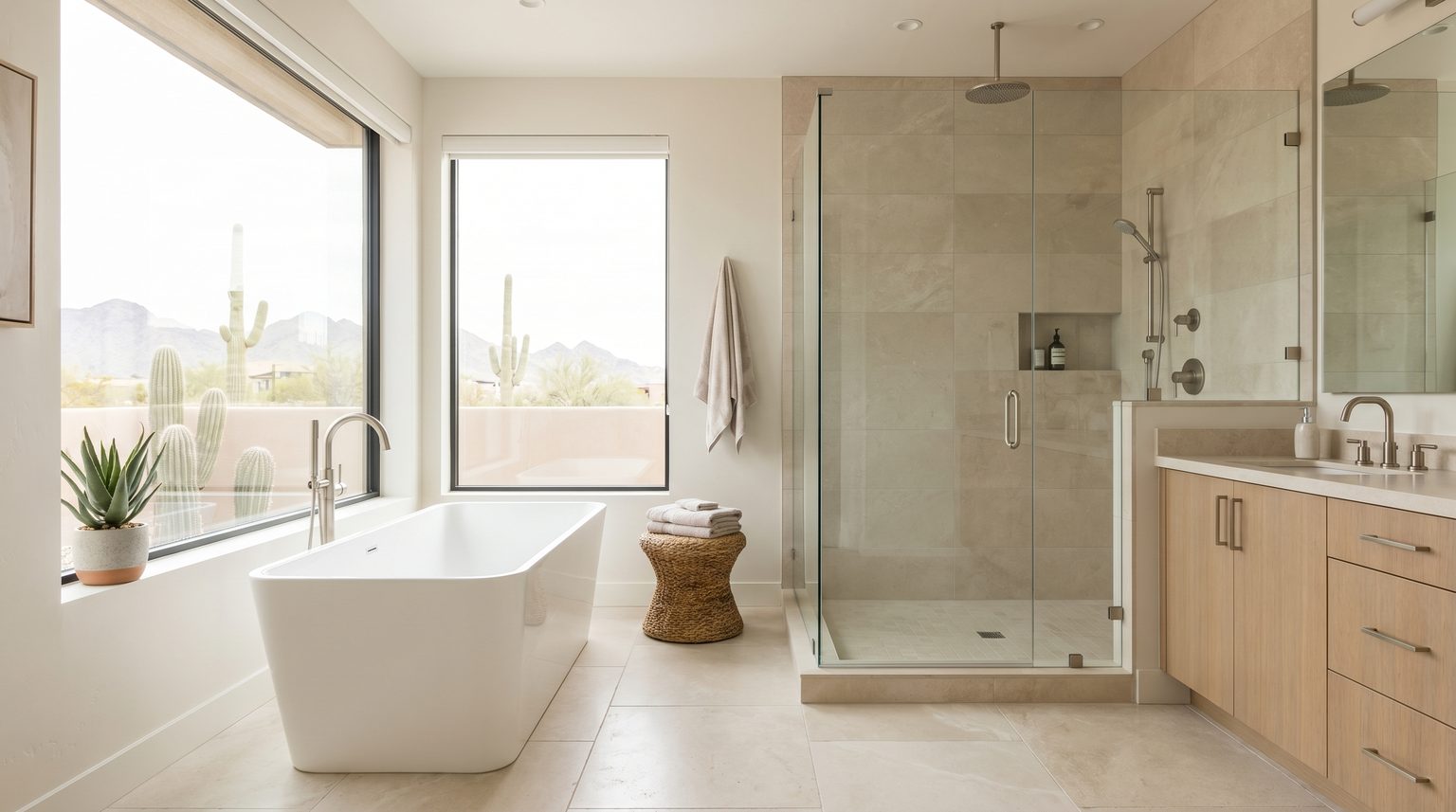
Yes. Professionally staged homes in Phoenix typically sell 73% faster than vacant homes and command 5-10% higher sale prices, according to Real Estate Staging Association data. In a buyer's market where inventory is climbing, staging helps your listing stand out in a sea of comparable properties.
This matters because days on market directly affect your bottom line. Every week your house sits empty costs you mortgage payments, utilities, insurance, and property taxes. Staging turns those holding costs into speed.
What the Phoenix Market Data Shows
ARMLS reports for Maricopa County show staged homes average 28-35 days on market versus 45-60 days for vacant properties in the same price tier. The gap widens in competitive submarkets like Ahwatukee and Gilbert where buyers have more choices.
Staged homes receive 2-3x more showing requests in the first two weeks. That early momentum matters because most offers come within the first 14 days of listing. After that, you're fighting perception that something's wrong with the property.
The price premium varies by segment. Entry-level homes under $400,000 see smaller gains (3-5%) because buyers focus more on affordability than aesthetics. Move-up homes from $500,000-$800,000 show the strongest staging ROI at 7-10% because buyers expect a certain presentation standard.
The Real Cost Breakdown for Phoenix Sellers
Professional staging in Phoenix runs $2,000-$5,000 for a 30-day initial period on a 1,800-2,200 square foot home. That covers living room, kitchen, primary bedroom, and one secondary space. Monthly renewal fees run $800-$1,200.
Compare that to your monthly carrying costs. On a $450,000 Phoenix home with a $2,500 mortgage payment, you're spending roughly $83 per day the house sits empty. Add $150-200 monthly for utilities and another $125 for insurance. Your daily burn rate is close to $100.
If staging cuts 20 days off your market time, you save $2,000 in holding costs alone. That breaks even with basic staging fees before you count any price premium.
Here's a worked example. You're selling a 2,100 square foot home in Chandler listed at $525,000. You spend $3,200 on staging and sell in 32 days at $520,000 (small concession). An identical vacant comp down the street sits for 58 days and sells at $505,000 after two price drops. You netted $15,000 more and saved $2,600 in carrying costs. Total advantage: $17,600 minus the $3,200 staging fee equals $14,400 ahead.
When Staging Makes the Most Sense
Staging delivers the strongest return in these situations. First, when you've already moved out. Empty rooms photograph poorly and feel smaller in person. Buyers struggle to visualize furniture placement and room function.
Second, when comparable inventory is high. Right now in Queen Creek and San Tan Valley, buyers can tour 15-20 similar homes in one afternoon. Staging makes yours the one they remember.
Third, when your home has layout quirks. An odd-shaped living room or awkward kitchen flow becomes an asset when a stager shows how the space works. Vacant rooms just look weird.
Fourth, when you're competing against new construction. Builders stage their models impeccably. Your resale needs similar polish to justify the price versus a brand-new alternative with warranty coverage.
When You Can Skip Professional Staging
You can avoid staging costs if you're still living in the home and your furniture is neutral, clean, and appropriately scaled. Work with your agent to declutter, depersonalize, and rearrange what you have. This costs nothing beyond your time.
In extremely hot seller's markets where everything sells in days regardless of condition, staging ROI drops. We saw this in Phoenix during 2021-2022 when homes went under contract sight-unseen. That environment doesn't exist today.
Luxury properties above $1.2 million sometimes skip traditional staging in favor of virtual staging for photos, then show the home empty. High-end buyers often plan gut renovations anyway and prefer to see the bones.
Teardown sales or land-value transactions obviously don't need staging. If you're marketing to builders or investors, save the money.
Virtual Staging vs Physical Staging
Virtual staging costs $50-150 per room and only affects online photos. It helps generate clicks and showing requests but creates disappointment when buyers arrive to an empty house. Some agents report virtual staging actually extends market time because it feels deceptive.
Physical staging costs more upfront but delivers results at every touchpoint. Better photos, better showings, better offers. The investment pays off in final sale price and speed.
One hybrid approach works well. Stage the main living spaces physically (living room, kitchen, primary bedroom) and use virtual staging for secondary bedrooms and bonus rooms. This cuts costs by 30-40% while maintaining in-person impact where it matters most.
People Also Ask
How long do I need to pay for staging in Phoenix?
Most staging contracts run 30 days with monthly renewals. The typical Phoenix home sells in under 45 days when priced right, so budget for one month initially and add a second month if needed. Your agent can negotiate staging removal timing with buyers after you're under contract.
Can I stage my own home instead of hiring professionals?
Yes, if you follow key principles. Remove 50% of furniture and 80% of personal items. Stick to neutral colors. Ensure all light fixtures have working bulbs. Define each room's purpose clearly. Most sellers lack objectivity about their own space, which is why agent guidance matters even for DIY staging.
Does staging work differently in Phoenix versus other markets?
Phoenix staging emphasizes outdoor living spaces more than cold-weather markets. A staged patio or backyard with seating and shade structures adds measurable value here. We also stage for summer heat—photos of cool, bright interiors perform better than dark, warm-toned spaces that make buyers think about air conditioning bills.
Bottom Line
Staging is a business decision, not a decorating preference. Run the numbers on your specific property. Calculate daily carrying costs, research comparable days on market, and factor in the price premium data for your submarket and price tier.
In most Phoenix scenarios today, staging pays for itself in speed and price. The investment makes particular sense if you've already moved out or you're competing in an inventory-heavy area like Surprise, Goodyear, or Maricopa.
Talk to a Phoenix agent who tracks staging ROI in your specific neighborhood. They can show you before-and-after results from recent sales and help you decide whether professional staging, DIY preparation, or minimal intervention makes the most financial sense for your timeline and budget.
What is your Phoenix home worth? Get a free home value report →

Ryan Melville
| SoldPHX - Ryan Melville at Keller Williams Realty Phoenix
or another way